Cast vs Forged Wheels What Is the Difference
Compare cast and forged wheels by manufacturing method, weight, load capacity and cost, then learn which specifications matter when choosing a set.
Cast and forged wheels differ first in how the aluminum is formed. Casting creates the main shape from liquid metal in a mold; forging shapes solid metal under compressive force. That difference changes the engineering options, but the process name alone does not tell you whether a particular wheel is suitable for your car.
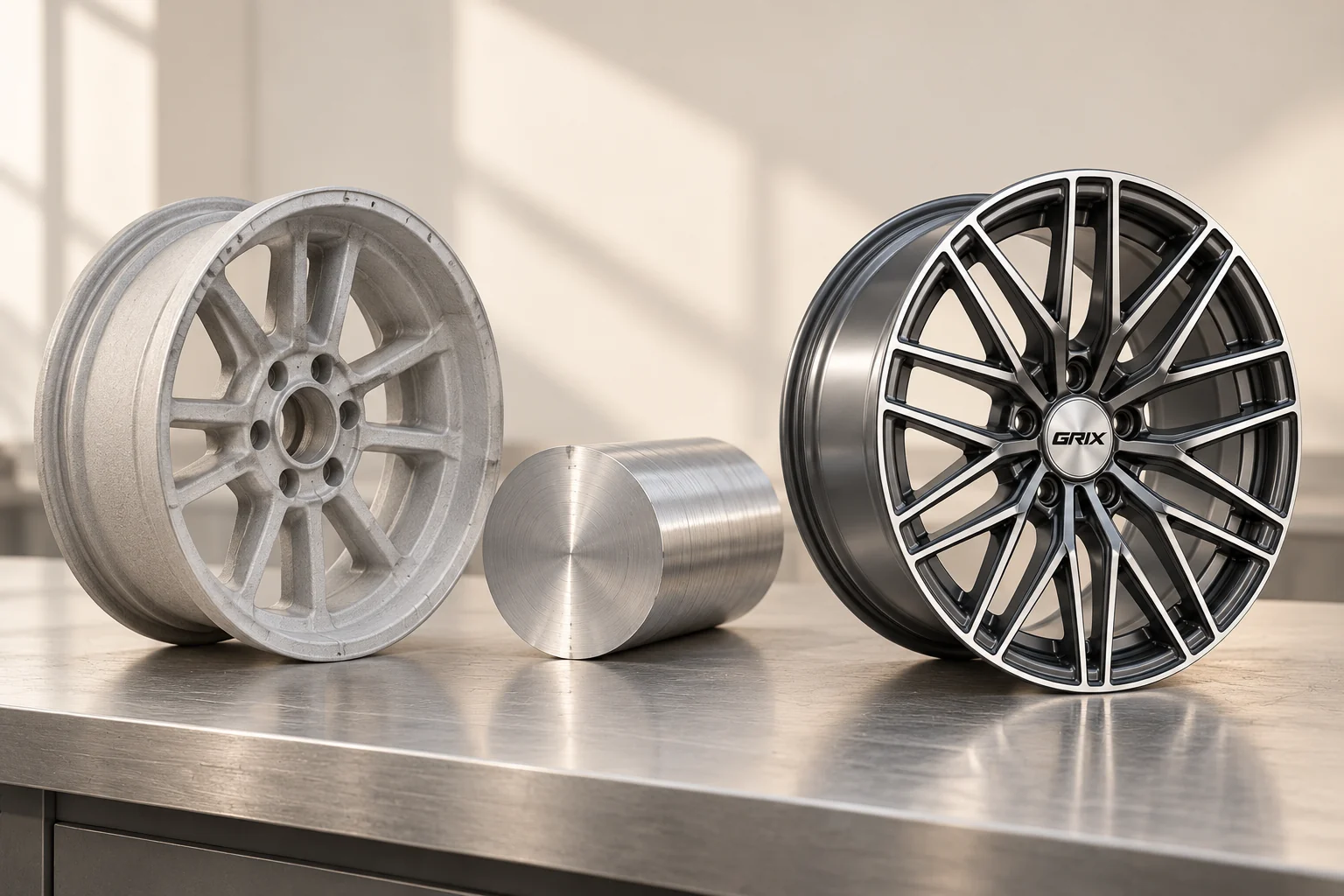
How the two manufacturing routes differ
A cast wheel takes shape as aluminum alloy solidifies in a mold. The manufacturer controls filling, cooling and subsequent processing to obtain the required properties and dimensions. Casting is well suited to repeat production and complex face designs. It should not be treated as a synonym for a low-quality or unsafe wheel.
A forged wheel begins with solid aluminum stock that is formed under pressure, followed by processes such as heat treatment, turning and milling. Some designs are substantially shaped in dies; others receive extensive machining after the blank is forged. A machined face is therefore not evidence of forging by itself. Ask how the blank was produced.
Technical references: BBS manufacturing overview · BBS forging technology
What that means for weight and load capacity
Forging can give the engineer more freedom to reduce mass while meeting a chosen structural target. The useful comparison is between finished wheels with comparable diameter, width, offset and intended use. Comparing a narrow street wheel with a wider wheel designed for a heavier vehicle tells you very little about the manufacturing process.
Separate the questions “How much does this exact wheel weigh?” and “What load and test requirements does it meet?” A light wheel is not automatically a stronger wheel, and a heavier wheel is not automatically a poor design. Specify the application first, then compare the evidence for the actual configuration.
Technical references: Apex on construction and finished-wheel strength
Where flow forming fits into the comparison
Flow forming describes a rolling operation used to form the rim barrel. In a common cast flow-formed wheel, the starting wheel is cast and the barrel is subsequently worked by rollers. This can improve the barrel material and allow a lighter section; it does not turn the cast center into a forged center.
A forged blank can also undergo a barrel-forming operation. The sensible question is not whether the wheel was ever spun, but which parts began as cast or forged material. Terms such as flow forged need an explanation of the actual manufacturing route.
Technical references: Enkei wheel engineering and MAT process · BBS forging technology
Compare the finished specification
Use the same checklist for both constructions. The table below identifies what to request; it is not a ranking of every product made by either method.
| Check | Cast wheel | Forged wheel |
|---|---|---|
| Construction | Confirm casting and any barrel-forming process | Confirm forged blank and subsequent forming route |
| Weight | Ask for the exact size and offset | Ask for the exact size and offset |
| Load and testing | Verify the intended vehicle and relevant test evidence | Verify the intended vehicle and relevant test evidence |
| Fitment | Check width, PCD, offset, center bore and brakes | Check width, PCD, offset, center bore and brakes |
| Cost | Compare the complete installed specification | Identify what the additional cost actually buys |
Why forged wheels often cost more
Forged production can involve additional forming equipment, heat treatment, machining time and material removal. Small production runs and individual configurations can further affect the quote. These are reasons to investigate a price difference, not proof that every expensive wheel performs better.
A meaningful quote identifies all four wheel specifications, the finish, supplied hardware and delivery terms. A low starting price for one unspecified size cannot be compared fairly with a complete configuration. For an overseas order, also establish what is included in shipping and what charges remain the buyer’s responsibility.
Technical references: BBS forging technology
How to choose for your own car
For a road car, start with a wheel that fits correctly, has documented suitability for the vehicle and leaves an adequate tire budget. For a weight-sensitive or demanding build, investigate whether a particular forged option delivers a measurable advantage at the required specification. Neither choice should begin with a logo or a process label alone.
For a GRIX enquiry, send the vehicle year, model and trim, brake specification, intended tire size and driving use. Include the wheel design you prefer and any suspension changes. The next step is to confirm an actual configuration; a general discussion of forging cannot replace that fitment work.