18 vs 19 vs 20 Inch Wheels Which Size Should You Choose
Compare 18, 19 and 20 inch wheels through tire sidewall, overall diameter, brake clearance, weight and replacement cost, with a worked size example.
The right diameter is the one that works with the vehicle, brakes and intended tires while meeting your priorities for ride, appearance and cost. A larger wheel is not automatically an upgrade in every respect. Compare complete wheel-and-tire packages rather than choosing 18, 19 or 20 inches in isolation.
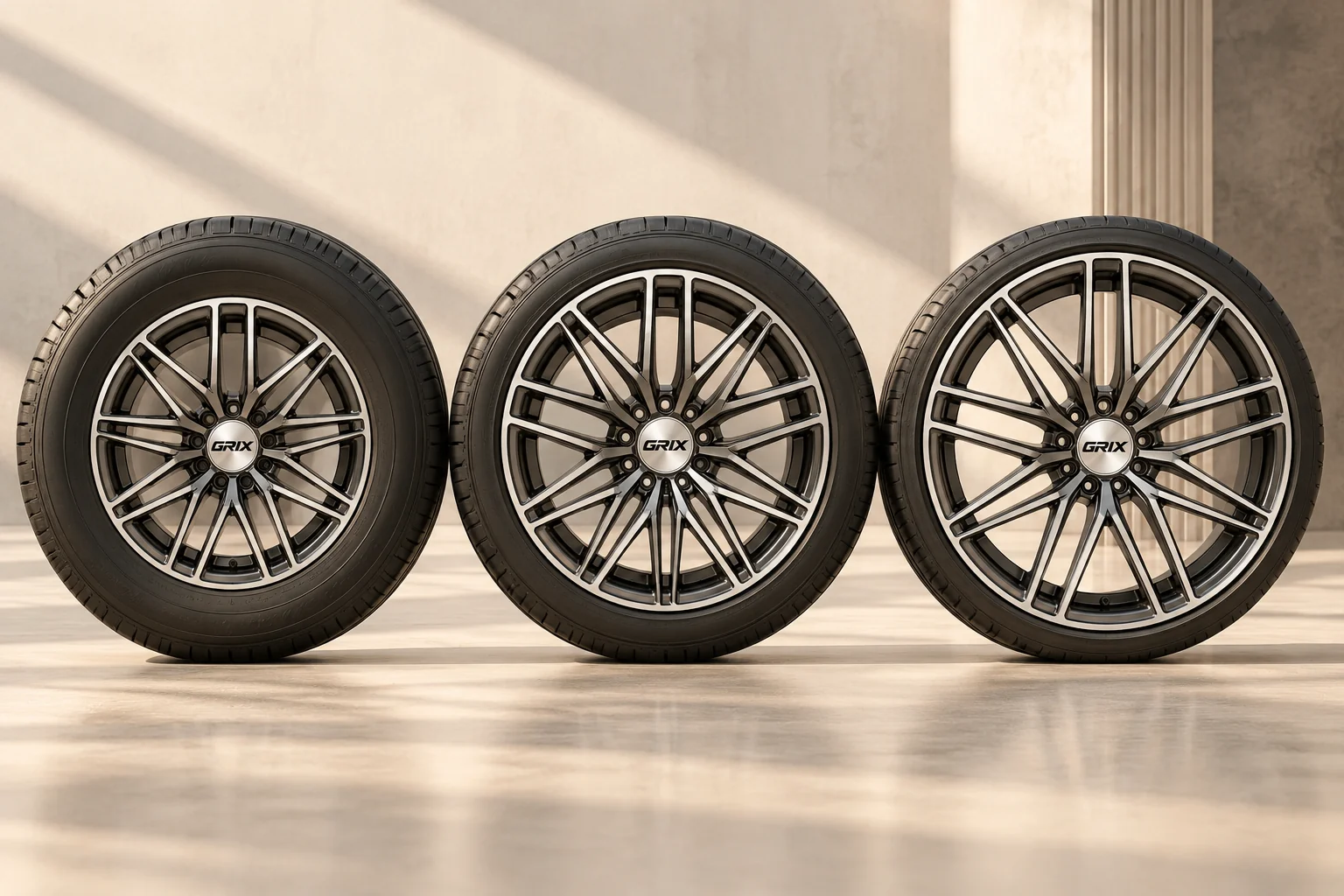
Wheel diameter is not overall tire diameter
In a size such as 245/40R18, 18 is the nominal rim diameter in inches. The 245 is nominal tire section width in millimeters and 40 is the aspect ratio: nominal sidewall height is 40 percent of that width. It does not mean a 40 mm sidewall.
When a larger wheel is used while maintaining approximately the same overall tire diameter, the tire generally needs a lower sidewall. That is why an 18 inch and a 20 inch package can have similar overall height while looking and feeling different.
Technical references: Michelin tire-size markings guide
Work through a dimension example
For an initial geometric comparison, nominal sidewall height equals section width × aspect ratio ÷ 100. Approximate overall diameter equals rim diameter × 25.4 plus twice the sidewall height. The following values are calculated from the markings, not measured tire data.
These three sizes are an arithmetic illustration, not a recommended conversion for any vehicle. Real dimensions, approved rim widths, load capability and rolling circumference must be checked in the tire maker’s data and against the vehicle requirements.
| Tire marking | Nominal sidewall | Calculated diameter |
|---|---|---|
| 245/40R18 | 98.00 mm | 653.2 mm |
| 245/35R19 | 85.75 mm | 654.1 mm |
| 245/30R20 | 73.50 mm | 655.0 mm |
Compare ride priorities without relying on diameter alone
Within otherwise comparable packages, retaining more sidewall can provide a useful margin for rough-road comfort and impact absorption. A shorter sidewall can give a more immediate steering response, but tire construction, pressure and suspension tuning also matter. It is possible to change those variables enough to outweigh the diameter difference.
If poor road surfaces are part of your daily route, investigate the smallest wheel diameter that is approved for the actual brake and vehicle configuration. If a larger visual proportion is the priority, consider the remaining sidewall and replacement-tire options before ordering. Neither approach should begin by assuming every 18 inch wheel fits or every 20 inch wheel rides badly.
Technical references: Tire Rack wheel and tire plus-sizing guide
Check the brakes and the tire specification first
The wheel must clear the actual brake package. An approved smaller wheel on one trim does not prove that it clears another trim’s calipers. Conversely, a larger nominal diameter does not guarantee adequate spoke clearance. Wheel profile and the brake envelope still need to agree.
Maintain the required load and speed specification and use a tire approved for the chosen rim width. The permitted rolling-circumference relationship, especially between axles on an all-wheel-drive vehicle, must follow the vehicle manufacturer’s requirements. A generic online percentage rule is not an approval for your car.
Technical references: Continental tire upsizing requirements · Michelin alternative tire-size guidance
Compare complete mass and recurring cost
A larger wheel does not always weigh more than every smaller wheel, because construction and design differ. Weigh or obtain specifications for the complete proposed assembly. A lighter wheel can lose its package-level advantage if paired with a substantially heavier tire.
Compare tire availability in the exact load and speed specification, purchase price, expected replacement arrangements and whether the proposed front and rear combination supports your intended maintenance plan. An attractive wheel size becomes a recurring tire decision for as long as you keep the car.
Choose a package rather than a number
For a daily-use brief, prioritize verified fitment, suitable tires and the ride characteristics you need. For a visual brief, decide how much sidewall and running cost you are prepared to accept. For track use, work backward from the intended tire and brake requirements rather than using road-car styling preferences as the specification.
Send GRIX the vehicle version, brake package, current tire markings and your priorities. The useful comparison is then between compatible 18, 19 or 20 inch proposals where available. Some vehicles or brake configurations will leave fewer choices, and the final decision should reflect those limits.